Have you heard the term “text complexity” and wondered what it means for you and your students? Dana and I, along with Freddy Hiebert, have developed a series of teacher development modules that we want to share with you. These can be incorporated into professional development activities or course syllabi for graduate degrees and teacher education programs. The modules may also be used by individuals who just want to explore what text complexity will mean in their classrooms. Right now, a preview version of the first module is available online on the Teacher Development Series page of TextProject. The full series of five modules will be available on August 16, 2012. In the meantime, we hope you find this preview useful and informative.
from the Common Core State Standards Initiative
More on text complexity on this blog: Follow the link.
A Planning Process for Differentiated Instruction with Digital Tools
By Thomas DeVere Wolsey
Differentiating instruction is a time-tested way of thinking about meeting students’ needs as they make progress toward achievement or learning targets. Differentiation is an elegant mindset that suggests to teachers a framework that permits them to engage students while focusing on learning results, and digital technologies offer many opportunities to differentiate instruction in meaningful ways. However, differentiating instruction takes a concerted planning effort on our parts as teachers and teacher educators. This is especially so as we develop a mindset that differentiation can be effective. In this post, I propose a three-phase approach to planning differentiated instruction:
Where do we start planning for differentiated instruction with technology?
What are considerations for who we teach, what we teach, and how we plan?
How do I put it all together?
Throughout this post, you will notice a pattern of threes based on where, what and who, and finally how. Because examples often help, this post will close with one which I hope will inspire you to even better differentiation with technology.
Where Do We Start the Planning Process?
Curriculum: What standards and lesson objectives are appropriate?
Results: What are the key attributes of the target concept to be learned? What is acceptable evidence that students are learning?
Resources: What human, digital, and traditional resources are available?
Let’s start with a premise: Planning differentiated instruction enhanced by technology is a perfect fit for the principles of understanding by design (Wiggins & McTighe, 2005) in which teachers plan instruction based on the results they intend for their students. This means that before any digital tools are chosen, before a single activity is determined, before assessment instruments are designed, the intended results must be decided. Results are informed by standards and further refined by lesson objectives. They are carefully honed predictions for student learning that require the teacher to determine the key attributes of target concepts and consideration for what acceptable evidence of learning might be. Once we know we have this down, the rest falls into place.
Right now, you might be wondering, “Hey, where’s the technology?” At this point in our three-phase approach, we can ask ourselves what human, digital, and more traditional resources are available to support these learning events. It will be tempting to think something like, “I really love Prezi and Glogster” so I’ll design my activity around those two tools.” An analogy might be helpful here as a kind of caution about choosing the technology before moving forward with other aspects of instruction.
In my backyard, I have decided to build a shed to store potting soil, extra pots, shovels, and so on. I know I have a claw hammer and a sledge hammer. I like my hammers, so I decide that those are the tools I will use. Already, you can see this will not work out well. I may need other tools, and I may even have to borrow one from a neighbor or go to the hardware store and buy a tool for this task. To be successful, I will need a pretty good inventory of the tools that are required for the job, the tools I own, and the tools I will borrow or buy. Planning to use technology to improve differentiated instruction is like that, too. The technology should match the demands of the tasks.
What Do I Differentiate + Who and How?
Differentiate curriculum by process, product, or content
Based on readiness for learning relative to the standards and objectives, student interests relative to the standards and objectives, and the way they learn in general
While considering overall lesson design and time requirements
Once we have a firm grasp on what results we expect based on standards and objectives, we can begin to think about the best ways to challenge our students. Embedded in what we differentiate are considerations for who our students are and what we know about them along with what aspects of the curriculum might result (there is that word again) in effective student learning. Curricular elements we can differentiate commonly include the processes of learning, the products of learning, and the content on which learning is based (Tomlinson, 2001). Juxtaposed with those elements are the needs of the students including their readiness for learning relative to the standards and objectives, their interests relative to the standards and objectives, and the way they learn as a general rule. Learning needs and curricular elements or demands can be thought of as a matrix, as represented in figure 1. What cell on the matrix might produce the best learning results for the specific students sitting in the classroom? Finally, we need to decide what part of the lesson will be differentiated, how much time is available, and how this lesson fits in broader learning goals.
Figure 1: Differentiation Matrix
How Do I put it All Together?
Develop options and choices for learning
Based on identified learner needs relative to the standards and objectives
While keeping in mind key attributes of the target concept and intended learning results
Options: High-quality differentiation typically means different students doing different things that lead to achievement of a common learning goal. Developing options is an effective way to put differentiation into effect. Sometimes the options are choices students can make based on the information they have about their own learning needs. At other times, the options are decisions that teachers make for students or are choices students make with guidance and nudging from their teachers. Options for learning in high-quality differentiation are always made with the key attributes of the target concept and effective learning results in mind.
Teachers develop options that meet identified learner needs while keeping key attributes of the target concepts and results in mind.
Checking for Differentiation: To check the effectiveness level of differentiated instructional tasks, fill in this sentence with details from your own lessons. Choose the element from the list in brackets or fill in your learning objectives or standards:
Based on what I know about the curriculum and my students, their [interests, readiness, or learning profiles] are [identify those interests, readiness levels, or learning profiles] relative to the objective of [insert the objective]. The [process, product, or content] will help students [achieve the objective] because…
So, Why Technology?
Early in this post, I asserted that technology offers the potential for powerful differentiation that results in high-quality learning. How digital technologies are embedded in the learning tasks is vitally important. They can be simple tinkering (or micro-differentiation, as Tomlinson, 2001, asserts) or those digital tools can vastly improve how students learn and how they interact in our digital world. In choosing tools to be part of the options or choices available to students, three (remember our rule of threes for each phase?) questions can guide our thinking about what tools are appropriate and useful.
What tools do my students know or might they learn to use?
What digital technologies are available to the students in the classroom, at school, at home? And a corollary: What digital technologies can students bring with them to school to assist in their learning?
Will the digital technologies that are part of the options for students really improve their learning relative to standards, objectives, and intended learning results?
Another example of high-quality differentiation using technology is available in this video:
An Example from a High School English Classroom
Imagine a high school English course in which students are expected to understand and analyze characters in novels they selected as part of a coming of age unit. The standard, drawn from the Common Core State Standards Initiative (CCSS, 2010) informs these differentiated tasks.
RL.9-10.3. Analyze how complex characters (e.g., those with multiple or conflicting motivations) develop over the course of a text, interact with other characters, and advance the plot or develop the theme.
The lesson objective relates directly to the CCSS standard; that is, students will be able to form inferences about characters from dialog and from their actions. Making inferences about characters from dialog and actions are key attributes that the teacher will use in guiding students as they work on differentiated tasks, and that will inform feedback she provides to students as they work. In the following example tasks, notice how the tools enhance the learning rather than restrict it; at the same time students are encouraged to use new literacy skills in learning as they complete the tasks. In these examples, presented as directions to students, tasks are based on student choices, provide flexible grouping arrangements, and encourage a limited range of technologies that align with the intended learning result.
Differentiation of Product by Student Interests (based on the novels they selected to read):
1. Sometimes what characters in novels we read say speaks volumes about them. Work with someone who read a book that is different than your own. Using Voicethread or a podcast, each partner should choose a character from their respective books. Create a dialog between those two characters that is clearly based on inferences you made about your respective characters. If you choose to work with Voicethread, choose appropriate images to correspond with the dialog you create. Ask yourselves, what would these two characters from different novels say to each other about their coming of age experiences? Challenge: Can you include, in your dialog, references to characters’ actions that lead you to believe characters would respond in a certain way?
2. Sometimes what characters in novels we read do tells us volumes about them. Work on your own to create a tree diagram, which includes several levels. If you would like to see an example of a tree diagram, click here. Use one of the interactive graphic organizer tools you find on the class webpage (for readers of this post, some possibilities are listed among the many tools here). At level one, identify the character and include the title of the novel. At level two, identify three or four characteristics of your chosen character that are based solely on their actions. At level three, find three or four actions in your novel that support your choice of attributes. Hint: You may want to choose the actions and categorize them, then identify the characteristics based on those attributes. Challenge 1: Share your graphic organizer with another member of your group and ask that person to add to your graphic organizer by either expanding the list of characteristics or adding to the possible actions that support the characteristics you chose. Challenge 2: Can you add a fourth level with an example from what characters say that supports the characteristics you chose?
3. Sometimes what characters in novels we read do and say tells us volumes about them. Using the Twurdy search engine, find three reviews of your novel that include analysis of the characters in the novel you read. Post your findings along with a paragraph indicating why you agree or disagree with the reviews you found. Be sure to include evidence in the form of inferences you have drawn from dialog or actions. Three to five examples will serve as evidence. Work with a member of the class who read a different book than you did to determine if there are common attributes for the characters in the two different novels. Use Google Docs to create a matrix similar to the one you see here. Share your link on the class wiki. Challenge: Can you identify a character from your novel that is like any of the characters in our reading of a Shakespeare play (or other touchstone text) earlier this year?
In each example task, the students act on the interest in the novel they have read, and they create a product that is true to the standards and objectives. Each can be assessed based on the intended results that are embedded in the standards, and each includes technology components that might increase student learning through collaborate to further enhance learning. Using the sentence frame suggested above, the teacher checks for differentiation:
Based on what I know about the curriculum and my students, their [interests ] are [grounded on the novels they selected to read for literature circles] relative to the objective of [character analysis]. The [product] will help students [analyze characters] because they must attend to the critical attributes of a character’s actions or interactions in dialog.
In your classroom, what successful tasks have you designed with the end in mind that were built on solid principles of differentiation and use of digital technologies? Use the comment button to add your thoughts to the conversation.
Pictures and words have gone together since the first word emerged from logograms in ancient Mesopotamia over 5000 years ago. One of the earliest illustrated books written specifically for children was Orbis Pictus (Comenius, 1658), and it took advantage of the power of pictures and words combined together. Today, graphic novels and comics are widely popular because, in part, they match words with images that, together, convey more than either might alone. Today, educators recognize the ability of properly chosen words matched with other visual information whenever they select a graphic organizer or teach students to create their own graphic organizers. In this Literacy Beat post, I explore how images can inspire young writers and how young writers might learn how their writing can inspire image-making, as well. Of course, in keeping with the theme of this blog, digital technologies will be central to our exploration.
Often, words accompany images (and vice versa) in such a way that one limits the other. For example, a caption under a photograph may limit the way the viewer of the photograph interprets the image. Charts, pictures, and graphs in an academic text may expand on some idea conveyed by words in the accompanying text. But, I wonder if the professor who taught a group of future teachers, me among them, was onto something when she noted that to really understand a thing, one had to draw it. Sometime later, a statistics professor encouraged a group of doctoral students that to understand statistics, one had to be able to draw the results. Images, these professors suggest, have the power to enlighten and inspire in ways words cannot. This may seem an odd thing for a person whose entire career is built around literacy education, so perhaps an example might help.
Write Me a Picture
As an entrée into poetry, I frequently asked middle school students to turn words into pictures. These concrete poems incorporate words in a physical arrangement that becomes an image. Michael P. Garofalo has created several that may serve as a model for your student writers, some of which make creative use of the online environment. Click the thumbnail to take a look at one.
Michael P. Garofalo
Pencils and paper still work, too. Click the thumbnail to see a student-created example.
Mexican Mariachi by an 8th-grade Student
Putting words together with images is a first step in thinking about how images might improve writing. It is also a first step in teaching students about composing multimodal texts that make the best use of the combined media.
Draw Me a Story
Images that inspire writing can be used insructionally in many ways. Three of those explored here are student-created images, prompts writing with images, and combined text and images via the infographic.
Student-created images can inspire students to better understand the world through their writing. One science teacher I know asked students to go outside and draw an outline of the landscape and buildings around their homes. Then every hour for four hours in a row, they were to go outside and draw in the moon as it appeared to them relative to the skyline. The images were simple, mainly outlines, but the learning the drawing activity inspired led students to notice something about the very familiar moon that they had never noticed before. These drawing led to inquiry about the motion of the Earth and its moon, and the inquiry with the pictures led to writing that was sometimes filled with the wonder that much school-sponsored report writing often lacks. Others have also asked students to observe natural phenomena closely through drawing and writing field notes in the form of a journal: If you would like to read more about the moon project, click here.
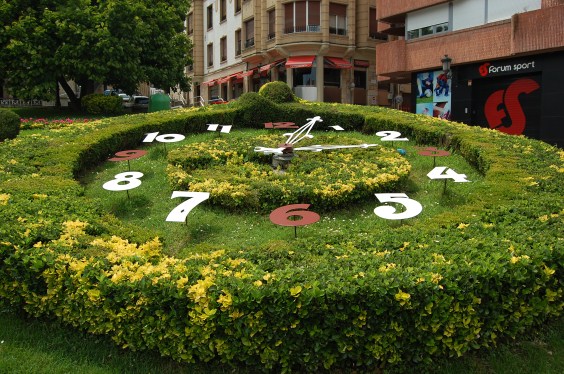
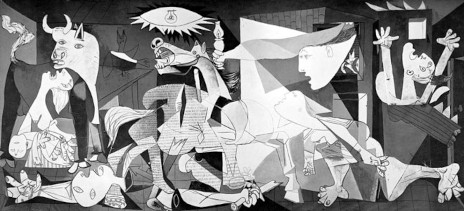
Prompts are the directions teachers give to students to direct them to action, particularly to write. At other times, images created by others prompt learning through writing. Two images juxtaposed might provoke students to the written word. The seemingly serene setting of a park in Guernica (May 2007) in the first image contrasts sharply with that painted by Pablo Picasso in the second image. The images, coupled with discussion, and online reading, might inspire more writing than any set of directions given to students.
Guernica by Thomas DeVere Wolsey is licensed under a Creative Commons Attribution-NonCommercial-NoDerivs 3.0 Unported License.
Pablo Picasso, la exposición del Reina-Prado. Guernica is in the collection of Museo Reina Sofia, Madrid (low resolution image)
Multimodality as an approach to composition, Choo (2010) proposes, can motivate young writers and help them (and their teachers) escape from escape inauthentic writing tasks that attend to surface features, for example the ever-present five paragraph essay. For those interested in learning more about Picasso’s painting and how he came to portray such destruction, visit this PBS webpage.
Infographics present information in a visual way. In this example, words that can be used to describe coffee are displayed as a circular array. Colors link words as the eye travels the path around and through the wheel. A difficult writing task for any author is to represent in words concepts learned through the senses of taste and smell. Students might use and create flavor and odor wheels to assist them in thinking about words and choosing the best word for their writing.
Composing Multimodal Text
Photojournalists use words and images to tell their stories; Choo (2010) offers five questions that might assist students to think about how both are used successfully by considering the strengths of each modality.
How do words function to “anchor” and give an interpretation of an image?
How do words function to “relay” or contribute to the meaning of an image?
Where will the image be placed in relation to the words and why?
How much of the frame-space will the image occupy compared to the words?
Is the focal point of the text on the image or on its words and why? (p. 172)
Using these questions as guides, students attend to the features of the images and words they choose and the multimodal texts that, together, they create. The Literacy Beat bloggers are interested in your multimodal projects and how images help your students write and writing helps them learn from images. Please share your ideas and successes by posting a comment, below.
Reference
Choo, S. S. (2010). Writing through visual acts of reading: Incorporating visual aesthetics in integrated writing and reading tasks. High School Journal, 93(4), 166-176.


 Bridget Dalton
 berdwyer
 Blaine Smith
 danagrisham
 jillcastek
 TDWolsey



 Literacy Beat
