Teaching Refugees: The Research We Have & The Research We Need

On Saturday, April 15, Literacy Beat and friends go to Chicago and the American Educational Research Association annual meeting.

By Thomas DeVere Wolsey

Next Saturday, Dr. Thomas and colleagues from around the world will meet for a symposium in Chicago. The symposium will consist of the following presentations. Dr. Thomas will serve as chair for this symposium.

Ibrahim M. Karkouti – Social Support for Refugee Students

Jill Hallett, Annmarie Handley, Sussan Oladipo, and Rachel Lackey – Refugee Families and The Literacy Landscape: Schools, Libraries, and Changing Community Needs

Mohamed Elhess – Finding Spaces of Belonging on Campus: A Case Study of Refugee Students in America

Daria Mizza – Finding a Pathway to Unlocking Refugees’ Learning Potential: Current Challenges and Lifelong Technology-Enhanced Learning Solutions

Mehmet Karakus and Anas Hajar – Promoting the Well-being of Asylum-Seeking and Refugee Children0 Within and Beyond the School Gates: Insights from the United Kingdom

Laila Kajee – Teaching Refugee Children in Troubling Times

Thomas DeVere Wolsey – When Trauma as a Refugee Transcends Generations: How Teachers Might Be  Allies to Help Successive Generations Build Success

Abstract

This symposium consists of seven presentations that explore how educators are meeting the demands of  the large and growing population of students who are refugees, and as important, to seek a consensus about what research that informs educational practice is still needed. Three themes include: 1. The built environment (e.g., schools and libraries) and tools (e.g., digital technology), 2. The social support that displaced students and their families need to be successful given the traumas they have encountered and continue to experience, and 3. The means by which educators can foster well-being as students.

Worldwide, large numbers of humans seek asylum or are internally displaced in their own countries (refugees, collectively). Of those, many are students in school or not in school or university.  While there is a great deal of attention given, appropriately, to the experiences of refugees, less attention has been afforded to the application of research to the teaching and school leadership practices teachers and other practitioners need to appropriately understand and serve children who are refugees. 

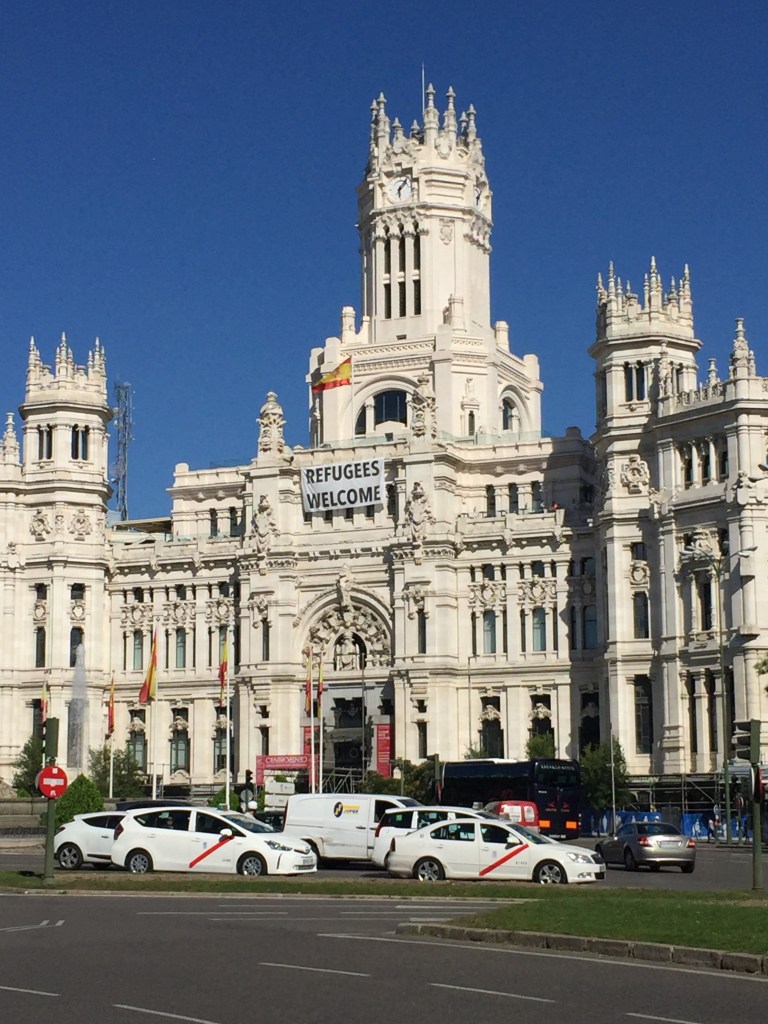
Refugees fleeing
Source: https://openclipart.org/detail/226376/refugees
  1. Objectives of the session

Given the large percentage of displaced persons around the world, and the institutionalized discrimination many face along with learning new languages, entering the job market if  possible, and many other challenges, this symposium brings together experts to promote dialog about effective instruction for refugee children. In this symposium, consisting of seven presentations, audience and presenters will explore innovative practices. Equally important, audience and presenters will expand the discussion to what research is needed and how best to put extant and new research into practice in schools and similar educational enterprises.

  1. Overview of the presentation

The seven presentations cover three overlapping themes. Each addresses two or more of the three themes including 1. The built environment (e.g., schools and libraries) and tools (e.g., digital technology), 2. Social support that displaced students and their families need to be successful given the traumas they have encountered and continue to experience, and 3. The means by which educators can foster well-being as students adapt to their new situation, whether temporary or permanent.

  1. Scholarly or scientific significance

We argue in these presentations and papers that the significance of research for educators lies primarily in how that research can enrich and improve practice in schools and other educational enterprises.  In the case of what is needed to teach displaced children and adults, research that addresses the diverse cultures and unique circumstances that refugee students face in higher education and PK-12. The symposium brings together what has, so far, been piecemeal approaches to a framework for teaching displaced students.  Given the trauma, the dehumanizing circumstances that led to seeking asylum, and the polarized political environments that exacerbate the extreme conditions faced by refugees, the discussion to promote effective practices through solid research is past due. In this way, we interrogate consequential education research in pursuit of truth and equity for some of the most vulnerable of students.

Social Support for Refugee Students

Ibrahim M. Karkouti

Purpose: The world’s attention has shifted to two new refugee waves that require immediate response to avoid creating new lost generations in Europe and Central Asia. Specifically, Ukrainian and Afghan students need significant support from teachers, administrators, policymakers, humanitarian aid professionals, and social workers to ease their refugee plight and prevent a dire scenario similar to that of their Syrian counterparts. Notwithstanding the importance of addressing the deleterious and traumatic effects of war and conflict on the wellbeing of Ukrainian and Afghan people, this session will unfold the story of Syrian refugee students in Lebanon, the biggest refugee-hosting country per capita in the world (UNRWA, 2020).

Theoretical Framework: Through the lenses of social support (House, 1981) and multicultural education (Ortiz & Rhoads, 2000), this session will examine the current status of Syrian refugee students in Lebanon.

Method & Sources: Secondary data (empirical research and reports of facts).

Findings & Significance: Specifically, it will discuss teachers’ lack of diversity awareness, describe what refugee students experience inside the classroom, and explain the types of support students need to overcome the barriers that obstruct their education.

Refugee Families and the Literacy Landscape: Schools, Libraries, and Changing Community Needs

Jill Hallett, Annmarie Handley, Sussan Oladipo, and Rachel Lackey

Purpose: In this presentation, educators discuss the disparate academic and literacy contexts for serving refugee and newcomer students within the same US city. They share the challenges faced by students, families, educators, administrators, and librarians in their respective contexts and how the pandemic has affected refugee students and families personally and academically. Together, they present strategies and recommendations for addressing educational and social-emotional well-being for refugee students across a variety of contexts in schools and libraries.

Framework: Teachers and students find themselves negotiating a staggering number of linguistic, literacy, and academic histories. As Cushing (2020) writes, “[l]anguage plays a critical role in reproducing imbalances in power and dominance, especially when powerful policy arbiters have the ability to regulate and control the language of others” (p. 432).  The schools and library discussed here are based in exceptionally linguistically and demographically diverse areas of Chicago with refugee community resources. Students’ languages and cultures are often absorbed as they assimilate into the dominant culture(s) of the school community.

Methods & Sources: Teacher, administrator, and librarian knowledge of refugee students as individuals can help prevent the disconnection that can form through the social distancing that predates the pandemic and persists. Here, we advocate for pragmatic, asset-based approaches to refugee literacies as newcomers navigate their new and changing communities. Qualitative ethnographic approaches were used throughout.

Findings: Language, culture, trauma, and the pandemic have all presented challenges of particular pertinence to refugee students and their teachers. Teachers find themselves working to bridge the communication gap while also helping all students make sense of content. Refugee families also require explicit instruction in the institutional culture of schools and libraries, from the significance of the school bell to the ramifications of absences and missing work, to accessing playgroups in various languages. Especially for students with interrupted formal schooling (SIFE), these values are not intuitive. Teachers and librarians question their own complicity in upholding these arbitrary, inaccurate, and often punitive institutional practices.

Teaching adolescents with trauma presents an additional challenge. Students arrive emotionally and physically fatigued from traumas associated with leaving their home country, adjusting to a new life, and experiencing homelessness, poverty, lack of food and other resources. For many, the pandemic was just the latest in a series of interruptions to their schooling. In-person cues from classmates and teachers are useless in a remote setting where students are expected to connect to the correct class at the correct time using unfamiliar technology, even when it is available.

Significance: Despite the challenges facing refugee students and families, this presentation offers myriad constructive solutions, particularly as they relate to literacy and social development. Recommendations include investigating student and family language and asset-based literacy histories, establishing school-university partnerships, providing access to technology and support, offering trusted adult counsel and peer mentorship opportunities, hosting family literacy activities, and presenting literacy materials and services that reflect the changing language needs of the community.

Finding Spaces of Belonging on Campus: A Case Study of Refugee Students in America

Mohamed ElHess

Context:There is no doubt that with the sociopolitical climate of immigration discourse in the U.S. immigration (building a wall, deportation, visa rejections, Muslim Travel ban) interweaving with the partisan political discourse of immigration sentiments (e.g., taking jobs, rejecting immersion in the culture), refugee students struggle to effectively integrate on campus. Therefore, understanding how these students experience a sense of belonging in their respective higher educational institutions is imperative in creating equitable and socially-just learning spaces in higher education.

Purpose: The purpose of this study was to explore a sample of refugee college students from North Africa and Middle East and the ways in which they experienced a sense of belonging in their respective institutions as well as the affordances and barriers they experienced as refugee students.

Theoretical Framework: The theoretical framework Third Space (Bhabha, 1994) strengthened the orientation of SB in this research. According to Elliot et al, (2016), ‘Third Space’ is the space for allowing “important breathing room” to establish social connections, offsetting loneliness, fostering personal learning, enjoyment, and development. (p.556). As refugee students may experience exclusion, marginalization, subordination, they strive to find a space in which they feel a sense of belonging through opportunities for safety, respect, and motivation to explore and make meaning of their experiences, and to have agency.

Design: In thisqualitative case study, data was collected across interviews throughout three academic years. A grounded theory approach was used to analyze the data. The data analysis started with open coding for each case study followed by a “cross-case analysis” (Hill, 2012).

Findings: The results showed that although the participants yearned to fit in and belong, the intersectional challenges of being a non-native speaker and resourceless shaped these students’ experiences of being left out, unvalued, and lost as outsiders. Results also showed that some participants were able to construct ‘spaces of belonging. Examples of these spaces were the international center and developing relationships with one another and safe faculty. These spaces serve as a prominent militating mechanism of eliminating the participants of feeling as different and thereby extending opportunities to build safe spaces.

Significance: This proposal addresses how belonging supports and negates specific races, cultures, and languages of marginalized individuals such as refugees in finding safe spaces. Thus, understanding contexts where we support and a sense of belonging of refugee students are vital in the 21st century and align with this year’s AERA theme, searching for the truth, by challenging the assumptions made about refugee students and the truths about refugee students experiences held by many in higher education, and those they should be able to trust and rely on for understanding and empathy.  456 words

Finding a Pathway to Unlocking Refugees’ Learning Potential: Current Challenges and Lifelong Technology-Enhanced Learning Solutions

Daria Mizza

Purpose &Framework: This presentation aims at proposing a guiding framework based on Fraser’s (2009, 2019) participatory conditions, for teachers of refugees to create alternative forms of success and establish foundations for lifelong learning.

Techniques: With this aim in mind, during the presentation we will examine UNHCR documents to acknowledge the purpose of lifelong education for refugees as a contemporary priority to unlocking refugee students’ potential and we will identify several key factors leading to its reconceptualization.

This is mainly accomplished by redistributing technology-enhanced resources to create activities that allow refugee students to develop skills for meaningful choice-making at transition points during and after their time in school.

Conclusions & Significance: The presentation concludes by emphasizing how student refugee lifelong learning opportunities are contingent upon the national education system detecting and accommodating the student’s preexisting skills and knowledge from the beginning. Such an improved learning experience can unlock refugee learners’ potential to establish themselves in a new society and serve as global citizens.

Promoting the Well-being of Asylum-Seeking and Refugee Children Within and Beyond the School Gates: Insights from the United Kingdom

Mehmet Karakus and Anas Hajar

Objectives: This presentation provides a narrative synthesis of the research findings on the well-being of asylum-seeking and refugeechildren in the United Kingdom. The relevant research studies on the well-being of asylum-seeking and refugee children in the UK context were retrieved, and their findings were thematically analyzed.

Framework: Racial and ethnic inequalities in child education and wellbeing have been described across population groups and contexts, particularly in developed nations such as the UK, the United States, Canada, Australia, and New Zealand (Müller et al., 2020; Robertson, 2022). This presentation provides a systematic review of resources that tackled the issue of the well-being of refugee and asylum-seeking children within and beyond the school gates in the UK.

Methods & Sources: The thematic analysis was based on the overarching research questions as the main themes: identifying adversities that negatively impact the well-being of migrant/refugee students, the support mechanisms/interventions used to sustain/improve the well-being of migrant/refugee students, and the challenges to supporting the well-being of migrant/refugee students at school.

The authors identified 36 research articles published in peer-review journals and thematically analyzed them to document these children’s negative experiences that could impact their well-being. The reported studies also explained the support mechanisms and interventions needed to sustain and improve child welfare and the challenges encountered in supporting their well-being.

Findings: The research findings suggest that asylum-seeking and refugee children have diverse socioemotional and behavioral challenges, needs, expectations, psychological resources, and coping mechanisms that require schools to develop socioemotionally, culturally, or/and religiously sensitive responses for a more inclusive school environment. Teachers and other school staff need more training opportunities and educational resources, and schools need more financial, staff, and infrastructure support to provide the required academic and socio-emotional support.

Significance: This study gives insights to policymakers and practitioners to develop more inclusive policies and practices to improve and sustain the well-being of refugee/migrant students. 

Teaching Refugee Children in Troubling Times

Leila Kajee

Context: Refugees, unlike immigrants who voluntarily move, confront a range of challenges that are unique to their situations. These include the need to teach children who have experienced the sustained trauma of being forced from their homes, possible loss of family members, loss of other forms of social support in the home country, health problems, and cultural and language challenges. The COVID-19 pandemic exacerbated the need for teachers, educational leaders, and policymakers who are prepared to serve refugees and the children of refugees. While for many students, school can be a safe place, for refugee students, it can either be a source of certainty or a source of more pain. Nearly 50 million children worldwide are refugees, and almost half of them do not attend school.

Purpose: Given this context, teachers face uphill challenges in coping with the diversity introduced by the introduction of refugee children. In this presentation I provide some of the key challenges encountered by teachers in the country, and submit for consideration a framework of key questions we could ask ourselves, as teachers, in our teaching.

Framework: In this presentation I propose a humanizing pedagogy, love as a critical act of resistance, hope and resilience to address challenges conceptually, and consider what this might imply for teaching refugee children.

Conclusions and significance: To address refugee needs in the classroom through a humanizing lens, and as an act of love, it becomes necessary to identify dilemmas and self-examine our feelings of fear, anger, guilt, or bias. As teachers we need to explore new roles and relationships with students, and to try on these new roles. To do so, we need to formulate a course of action and acquire the knowledge and skills to implement our new plans (Mezirow, 2003).

When Trauma as a Refugee Transcends Generations: How Teachers Might Be  Allies to Help Successive Generations Build Success

Thomas DeVere Wolsey

Purpose: This presentation explores how trauma, such as forced displacement, is manifested in the children and grandchildren of refugees. After a brief discussion of what generational trauma is, the presentation focuses on what teachers and school leaders can do when they are working with students whose families have been displaced.

Framework: According to Yosso (2015), there are at least six types of capital the refugee families might maintain while simultaneously remaining off the scope of schooling systems founded on preserving the prevailing and often majority culture. Kwan (2019) is also consulted. A framework for helping teachers discover their positionality in relation to displaced students is identified.

Mode of Inquiry & Sources: A review of the literature that demonstrates how teachers and teacher educators can recognize funds of knowledge (Moll, date). Narratives of the lives of second-generation and subsequent offspring also add depth teachers might draw on to support students beyond the everyday tasks of schooling.

Findings & Significance: Traumas passed on from one generation to the next do not necessarily fix or set the outcomes from one generation to another.  In this paper, we examine both the undesired outcomes and the possible achievements that might be built on what might have been tragic. ·       Transgenerational trauma often manifests itself in maladaptive behaviors. Understanding the nature of transgenerational trauma can change the way educators work with students who may be experiencing this type of trauma.       A key for teachers working with children who have experienced trauma is empathy. However, empathizing is difficult work, and it requires that teachers take care of themselves.  This chapter suggests that helping students find their sense of purpose can foster resilience.  Educators with a purpose can help students to find their purpose, sometimes lost for a time due to trauma, in society, family, and in themselves, thus building resilience.

References

Bhabha, H. (1994). The location of culture. Routledge.

Cushing, I. (2020). The policy and policing of language in schools. Language in Society 49, 425–450.

Elliot, D. L., Baumfield, V., & Reid, K. (2016). Searching for ‘a third space’: a creative pathway towards international PhD students’ academic acculturation. Higher Education Research & Development, 35(6), 1180-1195.

Fraser, N. (2009). Scales of justice. Columbia University Press.

Fraser, N. (2019). The old is dying and the new cannot be born. Verso.

House, J. S. (1981). Work stress and social support. Addison-Wesley.

Hill, C. E. (2012). Consensual qualitative research: A practical resource for investigating social science phenomena. American Psychological Association.

Katsos, N. (2020). Bilingualism in the family and child well-being: A scoping review. International Journal of Bilingualism, 24(5-6), 1049-1070. https://doi.org/10.1177%2F1367006920920939

Kwan, Y. Y. (2019). Providing asset‐based support for Asian American refugees: Interrogating transgenerational trauma, resistance, and affective capital. New Directions for Higher Education, 2019(186), 37–47.  https://doi.org/10.1002/he.20322

Ortiz, A. M., & Rhoads, R. A. (2000). Deconstructing Whiteness as part of a multicultural education framework: From theory to practice. Journal of College Student Development, 41(1), 81-93.

Robertson, A. S. (2022). Scottish children’s panels: Where volunteers are essential for fostering child well-being. Journal of Public Child Welfare, 16(1), 7-27. https://doi.org/10.1080/15548732.2020.1792389

UNHCR (United Nations High Commissioner for Refugees) (2012). Education strategy 2012–2016. Geneva: UNHCR. Retrieved 1 December 2021 from http://www.unhcr.org/protection/operations/5149ba349/unhcr-education-strategy-2012-2016.html.

UNHCR (United Nations High Commissioner for Refugees) (2016a). Global report 2016. Geneva: UNHCR. Retrieved January 4 2022 from https://reporting.unhcr.org/sites/default/files/gr2016/pdf/Book_GR_2016_ENGLISH_complete.pdf.

UNHCR (United Nations High Commissioner for Refugees) (2016b). Missing out: Refugee education in crisis. Geneva: UNHCR. Retrieved March 2 2022 from https://inee.org/system/files/ resources/UNHCR_2016.pdf.

UNHCR (United Nations High Commissioner for Refugees) (2019). Refugee education 2030: A strategy for refugee inclusion. Geneva: UNHCR. Retrieved 1 December 2021 from https://www.unhcr.org/5d651da88d7.pdf.

UNHCR (United Nations High Commissioner for Refugees) (2020). Protracted refugee situation explained. Washington, DC: UNHCR. Retrieved 4 March 2022 from https://www.unrefugees.org/news/protracted-refugee-situations-explained/#What%20is%20a%20protracted%20refugee%20situation?

Müller, L. M., Howard, K., Wilson, E., Gibson, J., & UNRWA. (2020). Protection brief Palestine refugees living in Lebanon. Retrieved from https://www.unrwa.org/sites/default/files/20-09-28_lfo_context_protection_brief_2020_final83.pdf

Yosso, T. J.  (2005) Whose culture has capital? A critical race theory discussion of community cultural wealth. Race Ethnicity and Education, 8(1), 69-91. https://doi.org/10.1080/1361332052000341006  


Teaching Refugees and Displaced Students

What Every Educator Should Know

Coming next year from Education & Language | Springer | Springer — International Publisher! Watch this page for the release date.

Teaching Refugees and Displaced Students

What Every Educator Should Know

Edited by Thomas DeVere Wolsey and Ibrahim Karkouti

To be published by Springer in 2023

About the book:

This textbook will serve as a guide for practitioners whose goal is to enhance refugee students’ learning experiences. With millions of children globally in refugee or seeking asylum status, this volume is a must-read for every 21st century educator.

Often, refugee students have missed a substantial amount of schooling as a result of the disruptions in their home countries and transit through refugee camps.  Others have never been to school at any time.  Refugees enter school with the same hopes and aspirations as other students, but they also confront serious challenges.

This textbook helps educators to restore hope through the following topics:

  •         empowering refugees in school
  •         liberating structures in resettlement camps
  •         increasing opportunity at university
  •         designing compassionate pedagogies
  •         leveraging technology
  •         connecting the community

Each chapter includes points to ponder as educators work to apply the principles of restoring hope for refugee students and their families. This textbook also provides practical suggestions and case studies that will help educators to put theory into practice.

Teachers and professors who are passionate about honing their skills will find this book a comprehensive resource when displaced students enter their classrooms.  This volume will also be of great interest to teacher-educators, pre-service teachers, educators serving in refugee camps and school administrators.

  • Illustrates concepts introduced throughout the book, many with case studies
  • Provides specific examples of pedagogies for displaced students and the children of displaced persons
  • Highlights how school and university leaders can support teachers to create a hopeful learning environment for displaced persons.

Read a draft chapter on transgenerational trauma affecting displaced students on Academia. ‘Fostering Hope Through Generations—Overcoming Trauma’ https://www.academia.edu/91188994/Teaching_Refugees_and_Displaced_Students_What_Every_Educator_Should_Know #TransgenerationalTrauma #intergenerationaltrauma #Epigenetics #Refugees #Displaced #Students

Comprensión en Cuatro Cuadrados


Aprendiendo con la lectura para los grados superiores

La enseñanza eficaz de idiomas se caracteriza por cuatro elementos críticos:

Contenido, conexiones, comprensibilidad, interacción.

Contenido

Las lecciones se centran en el contenido del nivel de grado y toman en cuenta las necesidades de desarrollo del idioma inglés que tengan los alumnos.

Ejemplos:  El alumno será capaz de… saber, entender, explorar… en ciencia, historia, literatura, matemáticas, etc.

Comprensibilidad

El lenguaje oral y escrito se presentan de manera tan comprensible como sea posible en un entorno de baja ansiedad y gran interés.

Ejemplos: visuales, aclarar, empatía, gestos, ajuste velocidad del habla, modelos.

Conexiones

El plan de estudios está conectado con los antecedentes y experiencia de cada alumno.

Tener en cuenta: Los conocimientos previos de cada alumno, y usar una variedad de formatos. El Contexto es importante.

Interacción

La instrucción se organiza para asegurar una alta frecuencia de interacción entre los alumnos y el maestro, entre los alumnos mismos, y entre los alumnos y el plan de estudios.

Cada interacción debe promover la reflexión sobre el aprendizaje propio de cada individuo (metacognición).

¿Qué es el contexto?

sustantivo: contexto; plural: contextos

  • Las circunstancias que forman el escenario para un evento, declaración o idea, y en términos de lo que puede ser completamente entendido y evaluado.

Fuente: https://en.oxforddictionaries.com/definition/context

Adaptado de los materiales de SDAIE en California.

What is Translanguaging? Building on the Strengths of Spanish-speaking Children

Dana L. Grisham, Professor (Retired), California State University

dana.grisham@gmail.com

and

Guest Blogger, Shira Lubliner, Professor, California State University, East Bay (Hayward)

shira.lubliner@csueastbay.edu

We have researched and written on Cognate Strategy Instruction (CSI) over the past decade, amassing a compelling argument for the use of CSI with Spanish-speaking Emergent Bilinguals (EBs)(Lubliner & Grisham, 2017; Lubliner & Grisham, 2015; Lubliner & Grisham, 2012; Lubliner & Hiebert, 2011, Lubliner & Grisham, 2008). In this blog post, we define translanguaging and we examine the role it plays in CSI.

Background 

The Latino student population in our schools continues to grow faster than any other group and test scores reflect the challenges these students face in learning academic English (U.S. Department of Education, 2015). Grouping students for English Language Development (ELD) instruction is the current approach to teach English as a second language, but poor outcomes for ELD instruction have led to the need for a different approach—our research on Cognate Strategy Instruction (CSI) (Lubliner & Grisham, 2012) is one promising approach.

Vocabulary is central to language acquisition, reading comprehension, and all forms of academic achievement (Castek, Dalton, & Grisham, 2012). Building the English vocabulary of Spanish-speaking emergent bilingual students (EBS) is a key factor in improving academic outcomes.

Spanish-speaking students may acquire a wide range of academic vocabulary words from 10,000- 15,000 cognates with shared meaning in Spanish and English (Lubliner & Hiebert, 2011). Despite the potential benefits of cognate instruction, two pervasive myths undermine teacher willingness to engage in this instruction: 1) a deficit theory that suggests that Spanish-speaking students do not know challenging vocabulary in either Spanish or English, 2) A “false friends” belief that so-called false cognates are too prevalent for the strategy to be effective. Our research has established that neither of these myths are true (Lubliner & Grisham, in process).

Lubliner and Hiebert (2011) analyzed the Academic Word List (Coxhead, 2000) and determined that more than 70% of the headwords were cognates. Cognates were sorted by frequency and a majority of cognates in Spanish are more common than corresponding words in English. For example, “edifice” is part of academic English, while “edificio” in Spanish is as commonly used as “building” is in English. The analysis suggested that Spanish-speaking EBS have a “cognate advantage” in learning academic English.

In our research, we found that cognates are helpful in identifying and using academic language. Academic language is different from ordinary spoken English because it is the abstract language of ideas and like awareness of cognates, academic language needs to be taught to students (Scarcella, 2003). Zwiers (2008) defined academic English as “the set of words, grammar, and organizational strategies used to describe complex ideas, higher-order thinking processes, and abstract concepts” (p.20). Students begin school with a fund of convesational language from their home culture, but in school they begin to use another language—that of learning in general and specialized fields. Zwiers refers to these new words as “bricks and mortar.” Bricks are the content specific vocabulary, like plate tectonics, while mortar are the general utility academic words, like analyze, define, summarize. In terms of vocabulary, we might compare this to Beck, McKeown, and Kucan’s (2002) vocabulary Tiers:

Tier 1: spoken, conversational words, like family, home, friends, etc. These are words that most English-speaking students already know and do not need to be taught.

Tier 2: words and terms useful across contexts—the “mortar” words such as analyze, summarize, define, or explain. These are words that many English-speaking students do not know and need to be taught.

Tier 3: words that are “bricks” or content specific, like photosynthesis. These are words that most students do not know and need to be taught as part of content-related instruction.

Although Tier 2 and Tier 3 words are considered more challenging for English-speaking students, this may not be the case for Spanish-speaking EBs. Spanish-speakers are more likely to know Tier 2 and Tier 3 words that are often everyday words in Spanish. For example, the academic (Tier 2) word construct is quite rare in English, with a frequency ranking of 6398. However, the cognate construir is very common in Spanish, with a frequency ranking of 525. Thus, we would argue that Spanish-speaking EBs are fully ready to employ their home language in the classroom, providing they have the support of teachers aware of that advantage and willing to apply translanguaging principles to their instruction.

CSI and Translanguaging

Cognate Strategy Instruction (CSI) teaches students the patterns of cognates and in our most recent work (Lubliner & Grisham, 2017), we contextualize CSI in “translanguaging,” a relatively new term in the research literature (Garcia & Wei, 2014; McSwan, 2017).

Translanguaging provides a framework for inclusive bilingualism. Translanguaging is reality-based; it is the way bilingual children and adults use a full repertoire of linguistic resources to communicate with one another. In contrast to subtractive bilingualism, translanguaging embraces all languages in a classroom in order to encourage meaningful communication between students and build on the social and cultural resources students bring to their classrooms—or “Funds of Knowledge” (Moll and colleagues, 1992). Translanguaging is a way to dignify the learner’s language and culture and requires flexibility and encouragement from the the classroom teacher.

Take for example, this scenario from a university-based teacher preparation program:

First student: ¿Qué haces este fin de semana? (What are you doing this weekend?)

Second student: Mi hermana y yo nos vamos a Santa Cruz para reunirse con nuestros primos. Ellos quieren ir a la playa por el día. ¿Que pasa contigo? (My sister and I are going to Santa Cruz to get together with our cousins. They want to go to the beach for the day. What about you?)

First student: No lo sé. Tal vez mi novio y yo simplemente pasar el rato en casa. (I don’t know. Maybe my boyfriend and I will just hang out at home.) Hey, did you finish the biology homework? That chapter was so long and boring.

Second student: It wasn’t so bad. I just skimmed the chapter and answered the questions. But I’m really scared about the test next week.

First student: Yeah, me too! ¡Mira! Simon está sonriendo contigo. Él es tan lindo. ¿Le gusta? (Look! Simon is smiling at you. He is so cute. Do you like him?)

Second student: No, no es así. No es más que un amigo. (No, not that way. He’s just a friend.) Hey Simon! What’s up? Did you finish the homework?

The young women in this example (Lubliner & Grisham, 2017, p. 2) shift seamlessly between English and Spanish—fully bilingual discourse as it happens in the real world. Teachers have traditionally been told that students’ languages needed to be kept separate and that “code switching” should be avoided. We now know that this is not true (Garcia & Wei, 2014; Guzzardo Tamargo, Mazak, & Parafito Couto, 2016). Bilingual and multilingual people possess a language repertoire that is comprised of all of the languages and dialects that they know—a heteroglossic language ideology (McSwan, 2017). Bilingual people move flexibly between languages depending on the subject they are discussing and the person to whom they are speaking. Experts in emergent bilingualism refute the idea that English is to be acquired as a second language. They believe instead, that students continue to acquire both languages simultaneously and continuously rather than in an ordinal sequence (Garcia & Wei, 2014).

We propose that as a strategy for learning English as a Second Language, the position taken by McSwan (2017) that EBs have a single linguistic repertoire, but that they have a rich and diverse “mental grammar” that may be termed a multilingual perspective on translanguaging. The objective and ultimate goal is for education to create fully bilingual and biliterate citizens.

For teachers, the question might be proposed: “Fine, but what does that mean? What does this look like in the classroom?” We would like to provide an example from our book (Lubliner & Grisham, 2017, pp. 56-57). The following lesson is based on a true story of Shira Lubliner’s grandparents’ immigrant experience.

Lesson 14. CLOZE Activity with Add/Change Cluster Cognates

Instructional Sequence:

  1. Project the following sentence on the white board and explain that it is an excerpt from a cloze (a text that has missing words that need to be filled in. “They left to escape poverty and to find __________ freedom.” Ask them to think about a word that would fit in the blank.
  2. Use the following think aloud as a basis for your instruction:

Teacher: Let’s see! What kind of word could fit in the sentence? I think that the missing words has to do with freedom. Freedom is a noun—a thing; so the missing word must be an adjective—a word that describes a noun. Here is a word bank that we’ll be using with this story (teacher projects the word bank on the whiteboard.

solution ( solución)               differences (diferencias)     different ( diferente)

customs (costumbres)          religious (religiosa)              adventure (aventura)

experience (experiencia)      finally (finalmente)             family (familia)

problem (problema)              fantastic (fantástica)           epidemic (epidemia)

Figure 1. Cognates

Students identify the adjectives (religious, fantastic, different) and then together pick the one that fits best (religious). Teacher points out that the context helped them to pick the word that fits best and eliminate the ones that don’t make sense.

  1. The text is next projected onto the white board and students are given the printed copy. Ask the students to work together, filling in the rest of the empty spaces with cognates from the word bank. Remind students to use cognates, parts of speech, and context to make sure that each word they select makes sense in the sentence.

The Great Flu Epidemic

My grandparents came to the United States from Europe in 1917. They left to escape poverty and to find _______________ freedom. Soon after they arrived, there was a terrible flu _______________ and my grandparents got very sick. My aunt was two years old at the time. (My father had not been born yet.) My grandmother was very frightened that her little girl would get sick and die. She did not speak English very well, so she used gestures to communicate with her neighbor. The neighbor wanted to help but she was afraid she would get sick, too. This was a terrible ______________. __________, they agreed on a ______________. My grandmother handed her little girl out the window to the neighbor, who took care of her until her parents recovered from the flu. My aunt wasn’t frightened. She thought it was a ____________________!

There were many _____________ between my grandparents and their neighbors. They had ______________ beliefs and ______________. But they shared a love of ______________. The flue epidemic was an ________________ my grandparents and their neighbors never forgot. They remained good friends until the day that they died.

  1. Closure: Call the class back together and go over the cloze activity (Key is in Appendix A). Students relate how they filled each blank and point out that all the words are Add/Change cognates and how that might have made the task easier. Finally, discuss the content of the story and have students relate their own experiences.
  2. Including students who speak languages other than Spanish. This is a good time to remind students who speak languages other than Spanish how the program will benefit them. Point out that Spanish is very close to Latin, the source of most academic vocabulary. As they participate in CSI activities students from diverse language backgrounds will learn Latin-based roots and word parts. This will help them acquire new Latin-based vocabulary, enabling them to better understand complex academic texts in English.
  3. Emphasize again that in your classroom, all languages and cultures are welcome. Encourage them to share words and phrases in their own languages. Explain that when students who speak languages other than Spanish incorporate their own languages into class activities they add to the linguistic richness of the class.

The Great Flu Epidemic is an American immigrant story. Nearly all students (except Native Americans) can relate to the experience of adjusting to a new country or community and have family immigration stories they would like to share. This translanguaging lesson welcomes students’ experiences, including those of students who speak only English and emergent bilingual students who speak language other than Spanish. In Lesson 16, students extend their knowledge of cognates into extended writing—working to tell their own stories or those of others they know. They may work in small groups by home language then sharing those stories with the class.

Conclusion

The CSI program is of particular value to students who speak Spanish due to the fact that Spanish is very close to Latin, which is the source of most academic vocabulary. However, CSI is also valuable to students who speak only English or languages other than Spanish. All students who participate in CSI activities learn Latin-based roots and word parts systematically. This will help them acquire new Latin-based vocabulary, enabling them to better understand complex academic texts in English. The sample lesson included in this blog demonstrates the principle of translanguaging—helping students ADD to their linguistic repertoires without subtracting from their home languages. Translanguaging welcomes the full range of students’ cultural and linguistic experiences into the classroom, building a more inclusive and potentially effective learning environment for all students.

Read more about translanguaging (click):
Translanguaging

References

Beck, I.L., McKeown, M.G., & Kucan, L. (2002). Bringing words to life. New York: The Guilford Press.

Castek, J., Dalton, B. & Grisham, D. L. (2012). Using Multimedia to Support Generative Vocabulary Learning. In J. F. Baumann & E. J. Kame’enui (Eds.). Vocabulary Instruction: Research to Practice, 2nd Edition, (pp. 303-321). New York: Guilford.

Coxhead, 2000. Academic Word List. Retrieved: http://www.uefap.com/vocab/select/awl.htm

García, O., & Wei, L. (2014). Translanguaging: Language, bilingualism and education. New York: Palgrave MacMillan.

Guzzardo Tamargo, R.E., Mazak, C.M., & Parafita Couto, M.C. (Eds.), (2016). Spanish-English codeswitching in the Caribbean and the U.S. Amsterdam/Philadelphia: John Benjamins Publishing Company.

Lubliner, S. & Grisham, D.L. (2008). The Effects of Cognate Strategy Instruction on Spanish-Speaking Students’ Cognate Identification, Vocabulary Acquisition, and Reading Comprehension. Paper presented at the 58th National Reading Conference, December 3-6, 2008, Orlando, Fla.

Lubliner, S. & Hiebert, E. (2011). An Analysis of English–Spanish Cognates as a Source of General Academic Language.  Bilingual Research Journal, 34, 1, 1-18.

Lubliner, S. & Grisham, D. L. (2012). Cognate Strategy Instruction: Providing Powerful Literacy Tools to Spanish-Speaking Students. In J. Fingon & S. Ulanov (Eds.), Learning from Culturally and Linguistically Diverse Classrooms: Promoting Success for All Students (pp. 105-123). New York: Teachers College Press.

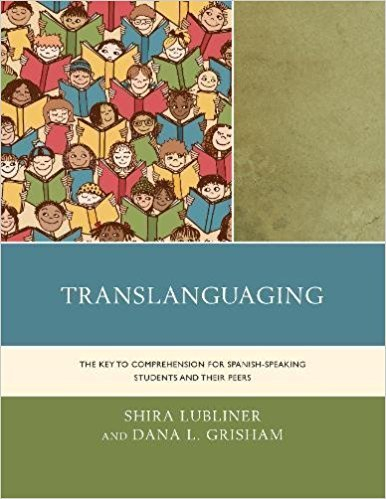
Lubliner, S. & Grisham, D. L. (2017). Translanguaging: The Key to Comprehension for Spanish-speaking Students and Their Peers. Washington, DC: Rowman & Littlefield.

Lubliner, S. & Grisham, D.L. (in process). Debunking the myth of “false” cognates. To be submitted to Journal of Literacy Research, Fall 2017.

McSwan, J. (2017). A multilingual perspective on translanguaging. American Educational Research Journal, 54, 1, 167-201.

Scarcella, R. (2003). Academic English: A conceptual framework. The University of California Linguistic Minority Research Institute. Technical Report 2003-1.

U.S. Department of Education, National Center for Education Statistics. (2015). The Condition of Education 2015 (NCES 2015-144), English Language Learners.

Zwiers, J. (2008). Building academic language: Essential practices for content classrooms. San Francisco: J. Wiley & Sons.

Welcome to Google Hangouts for English Language Learners

Going to a conference is always a good professional development experience. Earlier this year, I had the opportunity to attend the CATESOL Regional Conference in Southern California and attended a great session I had chosen for two reasons: (1) I am always interested in the use of technology for instructional purposes and this was a session on using Google Hangouts, and (2) as co-author of a recent book on translanguaging (Lubliner & Grisham, 2017) I love learning about ways we can serve our emergent bilingual students more effectively. The intersection was highly beneficial and I made the acquaintance of two colleagues working toward the same. The result is this invited blog (and stay tuned for one next month. I hope readers will find this useful and gain some instructional ideas from Kate and Kim! ~Dana

Google Hangouts

Difficulties presented by disengaged, shy, or unmotivated students in an English language learning environment can be detrimental to achieving learning objectives which are necessary for building student confidence in their language skills. Teachers can use multiple techniques to motivate learners, but some students, especially younger learners, do not flourish solely in a classroom setting. They crave and are distracted by the immediate gratification and acceptance they receive through the internet and social media platforms. Furthermore, beyond homework, students tend to disassociate their school life from their personal life, leaving little time for reflection or applied learning in the world beyond the classroom doors.

For younger students, who Twenge (2009) refers to as “Generation Me,” disengagement can be directly linked to the fact that they don’t solely exist in a real world setting. They learn and live very much in an online world, where they work endlessly to project idealized personas as a true extension of themselves. The implications of this technological reality for teachers is that they must not only tap into the real self students bring into the classroom, but also the digital self they work so hard to build to communicate who they are online.  Thus, by creating a space for the digital self in the learning process, teachers will find more opportunities to hold their students’ attention and promote meaningful learning. By creating an online community alongside the real world classroom community “Generation Me” students can build what Coleman (1988) refers to as social capital through negotiating meaning, sharing information, and demonstrating their own knowledge and value to their classmates. This type of communal and shared learning increases learner autonomy and authentic use of classroom knowledge inside and outside of the classroom.

This raises the question, how do we get our classrooms to straddle the worlds of digital and reality? How do we bridge the gap to effectively improve student learning? In this 3-post series, we will provide one way of addressing this question by introducing you to the multimedia communication app Google Hangouts and illustrating multiple methods of using the app to take your classroom into your students’ digital playing fields.

BASIC USES

Classroom Management

Google Hangouts is foremost a tool for communication. As a modern messaging app, it is intuitively used by most students. Once you create a group, your students have access to their peers in a unique way that you can use to your advantage. Students quickly become engaged with this tool as it mimics the social media platforms they use outside of school.

  1. Communication
    1. Teachers can send reminders to students about homework, community events, and other opportunities for students to practice English outside of school.
    2. Students can easily ask the teacher or their classmates questions relating to course content and language learning.
    3. Students can snap and share content in and out of class by taking photos and sharing them to the group. While we encourage note-taking, a quick photo at the end of class can ensure they have the material before running to their next class.
  2. Increase Language Output
    1. Shy students come out of their shell and are able to show off their grammar expertise in this low stakes environment.
    2. Conversations go beyond classroom walls, as students interact with one another for assignments or for fun.
  3. Build Community
    1. Giving students a safe space to practice English with one another relieves the pressure from becoming “friends” on other forms of social media.
    2. Students can easily share interesting things they find with their classmates, from language practice tips to cultural nuances. Teachers can encourage sharing articles, videos, and other relevant links as appropriate to their situation.

Classroom Enhancement

Bringing students’ digital selves into the classroom is an effective way to bring their attention to a lesson. Although students are inside the classroom, it allows them direct access to the outside world, endless realia, and personal examples. The ease with which the app allows you to share and view posts builds learner autonomy by giving students an active role in building the lesson around their interests and experiences.

Warm Ups

Google Hangouts can be a useful tool to help ease students into a lesson using realia and their own interests to get them focused.

  1. Emoji Story: Put students in pairs. Have students tell the story of their previous day in emojis and post it in Hangouts. Then, have students guess their partner’s activities.
  2. Class Poetry: Going around the classroom, each student can add a line to a poem in Hangouts (this could be based around the theme of the lesson or include review points from the previous lesson). When you’re done, post the poem on Reddit.com and see how many likes it gets by the beginning of the next class. This is a great one for building camaraderie.
  3. Create a daily challenge: This can be as simple and fun as giving students 2 minutes to post the cutest baby animal picture or funniest meme they can find and voting on the best one. On the other hand, quotes, pictures, trivia questions, riddles, music, and so much more can all be used to introduce the topic of the lesson in a fun way. Sharing so much content right at the beginning of class is going to inspire conversation and activate background knowledge around a topic.

Grammar Lessons

After teaching your grammar point, students can use Google Hangouts to show their comprehension. Instead of asking students to give you verbal or written examples individually or at the board, have all students send an example of the grammar point to the Hangout. This allows you to view all students’ work at once, and to easily correct it as a class instilling the good habit of proofreading, and reading aloud to check for errors.

Building upon this, you can connect it to the outside world by giving students a few minutes to search the Internet for examples of the grammar IRL (In Real Life), and then identify the various uses of each point.

Reading

Teaching students to be active readers can be quite the challenge, but Hangouts can help. First, assign a short silent reading assignment at the beginning of class. You can even post the reading in the Hangout to keep your lesson paperless and eco-friendly.

  1. Vocabulary: As students read, ask them to use the dictionary feature to look up words they don’t know, and have them post those definitions to the hangout. This creates an automatic vocabulary list for you to use for quizzes, homework, review, writing assignments, and other activities. Furthermore, it lowers the students stress levels because they will see that everyone has questions versus only one student being brave enough to ask.
  2. Summaries: Read together as a class, but after every paragraph, have students summarize the paragraph. As a class, students can review the summaries and decide which ones are most accurate. You can then piece the most accurate ones together to create a summary of the whole reading for the class to keep for review or a study guide.
  3. Questions: Good readers ask questions and make connections. When reading in class, you can focus on teaching students about using different types of questions to help them be better independent readers. Focusing on one style of question at a time, you can ask students to create their own questions to discuss the reading in small group. This can range from pre-knowledge and comprehension questions to evaluation and synthesis questions. For example, first, walk students through a set of questions designed around using context clues to help find the meaning of a word. Then, have them do the same with a word from the reading they were unsure of while posting the questions they used to find the meaning in hangouts. This is an effective way to emphasize the benefits of slowing down, asking questions, and realizing you can find the answer without anyone’s help or a dictionary.

GET STARTED WITH HANGOUTS

Signing Up

Google Hangouts is free to use, all you need is a Google account. If you already have a Gmail account, you can use it or create a new account just for use in your classroom. Don’t have a Google account yet? Follow the instructions below.

*All students must also have a Google account to participate in Hangouts chats*

  1. Go to www.google.com
  2. Click “Sign In” on the top right hand side of your web browser:

    Hangouts 1

    Signing in

  3. Click “More Options,” then, “Create an Account”
  4. Enter your desired login information.
  5. You now have a Google account.

Signing On

To access the Google Hangouts app on your web browser, follow the steps below.

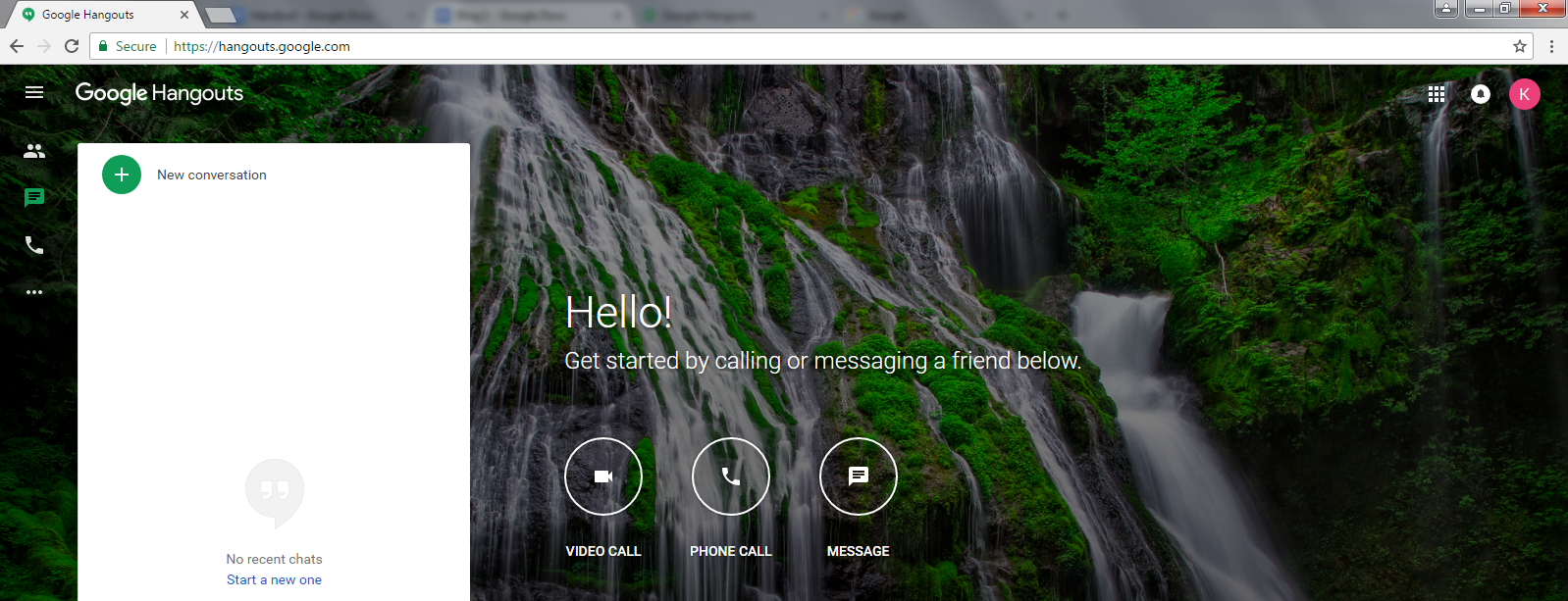
  1.  Go to: hangouts.google.com

Hangouts 2

Go to Hangouts

2.  On the left side of the screen, click “New conversation”

Hangouts 3

New Conversation

3.  Select “New group” and enter the Gmail addresses of your students. You can give your group a Name. When you have all the addresses in, click the green check mark.

Hangouts 4

New Group

4.  A chat box will appear on the right side of your screen with all of your participants.


Hangouts 5

Chat

5.  Send your first message! Try “Hello, class!”


Hangouts 6

Hello Group Controls

Using the App

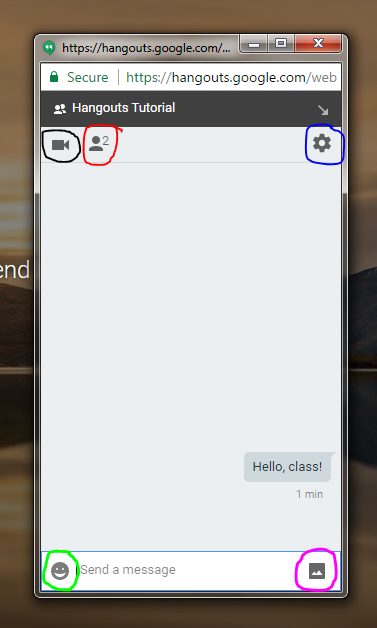
Now that you have your group set up, there are a few key features to notice. Note the colors on the image below, as their functions are described in detail below.

RED: This icon shows how many people are in the chat. If you click on it, you can see a list of participants. In this list, you can add or remove participants.

BLUE: These are your chat settings. In this menu, you can change your group name, set up notifications*, archive your conversations, and adjust your joining settings. (*If you do not want to receive an alert every time someone posts in the group, uncheck the “Notifications” box.)

BLACK: Live video chat. This calls everyone in the group and uses your webcam or cell phone camera.

PINK: Send pictures or videos to the chat.

GREEN: Emojis! Students love to express themselves with emojis.

Reminders:

  • Set ground rules for your Hangouts groups. Include students in the process of rulemaking, but be sure to include one that defines what is appropriate (example: Do’s and Don’ts for Hangouts)
  • Determine ahead of time how much you will commit to using Hangouts outside of class with students, and make it clear to them. Example: “I will only check Hangouts until 4 pm, and then I will turn off notifications,” or, “I am not available to respond outside of school hours”
  • When using Google Hangouts you will need wi-fi, and we recommend always providing an example of exactly what you want students to do in the app, versus a written or verbal direction
  • Screencasting or projecting Hangouts for the whole class on a larger screen still allows for a main focal point and creates a sense of responsibility for the students to provide good content
  • Be flexible. Technology in the classroom doesn’t always go as planned, so make sure you have backups or alternatives for when this happens.
  • Get creative. Have fun, think outside the box, and enjoy using this free tool in your classroom!

Stay tuned for our next blog for more ways to use Google Hangouts in your classroom!

References:

Alptekin, C. (2002). Towards intercultural communicative competence in ELT. ELT Journal, 56(1), 57-64. doi:10.1093/elt/56.1.5

Brindley, J.E., Walti, C., & Blaschke, L. (2009). Creating Effective Collaborative Learning Groups in an Online Environment. The International Review of Research in Open and Distributed Learning, 10(3). doi:http://dx.doi.org/10.19173/irrodl.v10i3.675

Coleman, J. S. (1988). Social Capital in the Creation of Human Capital. American Journal of Sociology, 94. doi:10.1086/228943

Lin, J., Peng, W., Kim, M., Kim, S. Y., & Larose, R. (2012). Social networking and adjustments among international students. New Media & Society, 14(3), 421-440. doi:10.1177/1461444811418627

Lubliner, S. & Grisham, D.L. (2017). Translanguaging: The key to comprehension for Spanish-speaking students and their peers. Lanham, MD: Rowman & Littlefield.

Tang, Y. (2006). Beyond Behavior: Goals of Cultural Learning in the Second Language Classroom. The Modern Language Journal, 90(1), 86-99. doi:10.1111/j.1540-4781.2006.00386.x

Twenge, J. M. (2009). Generational changes and their impact in the classroom: teaching Generation Me. Medical Education, 43(5), 398-405. doi:10.1111/j.1365-2923.2009.03310.x

About Kate and Kim 

Kimberly Guppy

Kimberly is an adjunct ESL instructor at Los Angeles City College in Los Angeles, California. She received her M.A. in Curriculum & Instruction (TESOL emphasis) from the University of Kansas in 2015 and began teaching at an IEP in Los Angeles. As a professional, Kimberly is a member of both CATESOL and TESOL, and is the coordinator-elect of the Technology-Enhanced Language Learning Interest Group in CATESOL. She is also developing the new catesol.org website, which is set to launch in Fall 2017.

Kate Lulinski

Kate is the Academic Coordinator for the IEP program at Cal America Education Institute in Koreatown, and recently started teaching ESL for the Los Angeles Community College district.  She can be reached at mskatelu@gmail.com

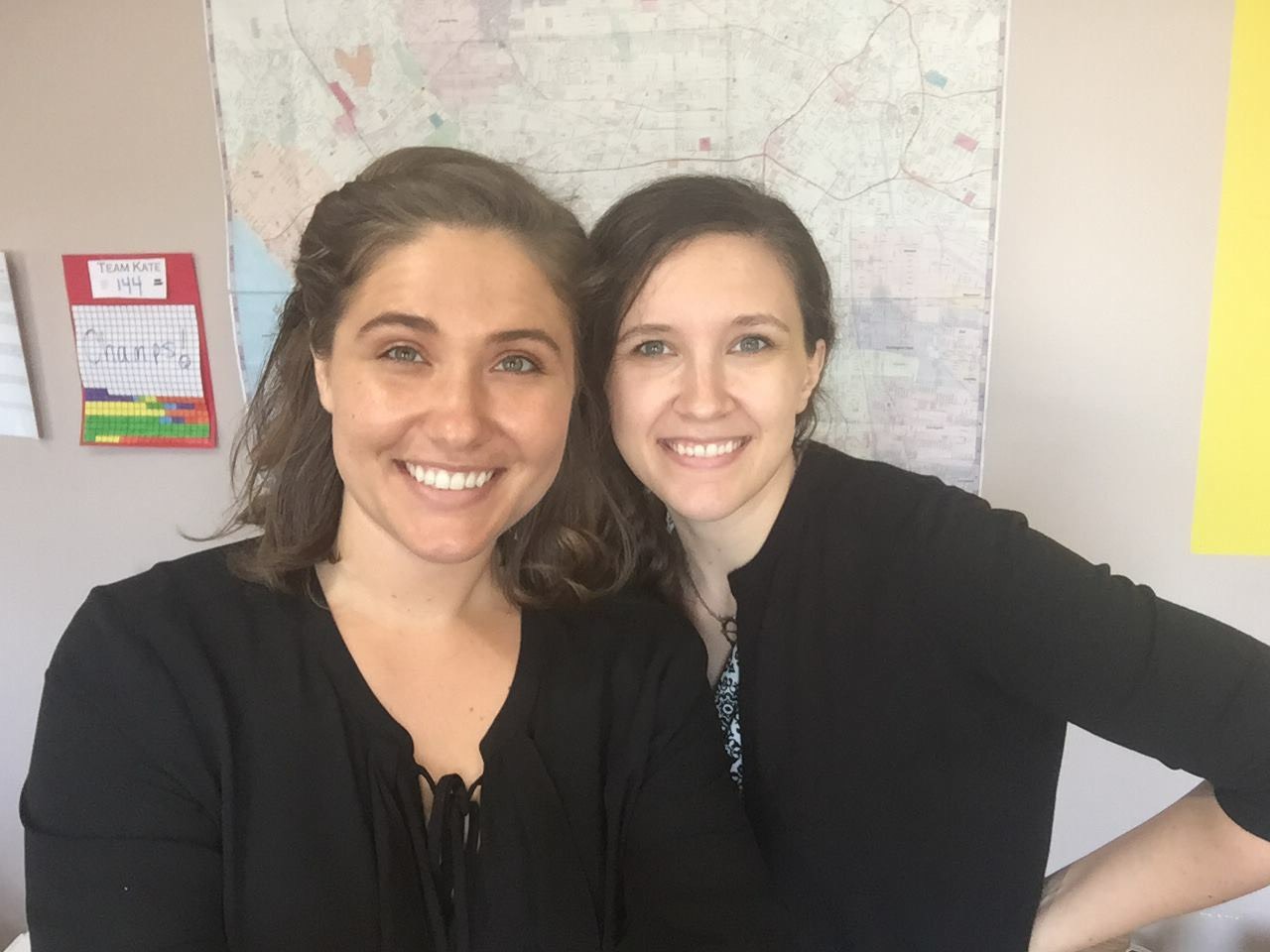
Kate and Kim

Kate and Kim

Online Cognate Resources for Vocabulary Development

A Guest Post by Patricia Acosta and colleagues

Patricia and her colleagues at Eastern Oregon University compiled this list of online resources for vocabulary development using cognates. Thanks, Patricia, for sharing!

Cognates are words that have the same or similar spelling and meaning in two languages. Teaching cognate awareness is a way to build academic vocabulary and reading comprehension.  By connecting two words in two languages, knowledge of the word and concept in the native language transfers to English.

The following is a list of cognate resources.

Provides a list of English and Portuguese, Italian and French cognates.

Provides a list of English and Spanish, Portuguese, Italian, French and Romanian cognates.

Provides strategies for teaching cognates, videos, and a list of English and Spanish cognates.

Provides more than 25,000 frequently used English and Spanish, French, and Portuguese cognates.  Provides an Online Dictionary of Cognates, Google Chrome Cognate Highlighter that will automatically highlight cognates, false cognate awareness, information on psycholinguistic aspects of cognates, free materials, and other resources.

Provides a list of English and Spanish cognates that have the same spelling and words that vary slightly in spelling.  In addition, provides a list of false cognates; words with similar spelling but have very different meanings.  Vocabulary flashcards, vocabulary quizzes, spelling quizzes, matching, word order quizzes and multiple choice quizzes are available.

Provides a list of Russian and English cognates.

Provides a video and list of English, Spanish and Arabic cognates.

Provides 1001 English and Spanish Cognates.  List includes words with the same spelling in both English and Spanish and words with similar spelling.

Subject specific English and Spanish cognates from A-Z. Cognates are organized in alphabetical order and by subject; language arts, math science and social studies.

Provides English and Spanish cognates, as well as false cognate awareness. Lists cover common Greek and Latin Roots, common English and Spanish cognates in alphabetical order and cognates for weights and measurements.

Read more about Cognates on Literacy Beat.

Credit: This list of cognate resources was compiled by students from Eastern Oregon University, ED 556 Applied Linguistics, Winter Term 2017 course.

Patricia Acosta is an in-district substitute. She also taught Spanish Reynolds High School in Troutdale, Oregon, and she is a graduate student in the READ Oregon program at Portland State University. Her teaching endorsements include Spanish, ESOL, and library media.

Education Dictionaries and Glossaries

By Thomas DeVere Wolsey 

In August, I published a post with links to discipline-specific glossaries and dictionaries. Because the internet has such a wealth of resources, it is sometimes difficult to find the sites you want or the key words for a search you need. Lists with links can help readers find the resources they need quickly. Continuing the dictionary list tradition, I compiled some general education dictionaries online. The criteria for inclusion are the same as in the discipline-specific post, except that the resource audience includes teachers and parents.

Parents may want to catch up on the words teachers use. Because schools and states purchase materials from different publishers, sometimes differing terms are heard in the faculty lounge or the school board room. The underlying ideas may be the same, but the word to describe that idea could differ from district to district.  Here are some resources to learn more about the words teachers use.

Reading Rockets

Reading Rockets

Language and teaching strategies: Effective teachers use a variety of strategies to guide their students. This glossary from Reading Rockets organizes them by the type of language learning task (phonological awareness, phonics, fluency, vocabulary, comprehension, and writing). http://www.readingrockets.org/strategies


Glossary of Language Education Terms

Wikipedia

English Language Learners: WikiProjects Glossaries provides this resource that includes terms used in teaching English language learners (students whose first language is not English). https://en.wikipedia.org/wiki/Glossary_of_language_education_terms

The United States Department of Education also publishes a useful glossary of terms related to teaching English language learners. http://www2.ed.gov/about/offices/list/ocr/ell/glossary.html 


Teachnology glossary

Teach-nology

General Teaching Glossary: General terms that go beyond those used just in language learning environments can be found on the Teach-nology site. http://www.teach-nology.com/glossary/


Fractus Learning Technology Terms for Teachers

Fractus

Technology in Education: As technology becomes an increasingly useful component for teaching, new terms have made their way into the classroom. Learn some of them on the Fractus Learning blog.    http://www.fractuslearning.com/2013/03/04/technology-terms-for-teachers/

Another useful site with technology terms, but not specifically for educators or parents, is Netlingo.com


Understood Disability Important Terms

Understood

Special education: The field of special education has its own set of terms, often derived from policies and laws that govern special education settings.  Look them up on the Understood website.          https://www.understood.org/en/learning-attention-issues/getting-started/disability-important-terms/terms-you-may-hear-from-educators


What other categories should be added to this link list? Are there other dictionaries or glossaries that you can suggest for any of the categories in this post?


Student Oral Language Observation Matrix: Spreadsheet Style

By Thomas DeVere Wolsey

A time-tested standby to help teachers understand English learners’ oral language proficiency is the SOLOM or Student Oral Language Observation Matrix. The instrument is not a test, but it is an informative assessment that teachers use to inform instruction. There are many versions in html, Word, and PDF, but an interactive version in Excel (.xls) may prove useful.

SOLOM and Excel

SOLOM is in the public domain, so you may find some variations in the various published versions of the Matrix.   Teachers and teacher educators use the Matrix, developed by the San Jose (California) Bilingual Consortium, for a variety of purposes:

  • It fixes teachers’ attention on language-development goals;

  • It keeps them aware of how their students are progressing in relation to  those goals; and

  • It reminds them to set up oral-language-use situations that allow them to observe the student, as well as provide the students with language-development activities.

    Source: Center for Applied Linguistics

Download SOLOM (Excel)

Download SOLOM (Excel) here.

The Box.net file opens in preview mode; to download, find the upper right ↓ download arrow. Figure 1 shows where to locate the download icon.

SOLOM (Excel)

Figure 1: Download from Preview Mode – SOLOM Excel

What are the advantages of the Excel version of SOLOM?

  1. You can replicate this SOLOM digitally without killing any trees (no paper needed).
  2. You can add sheets for each student to keep all your results in one file.
    • Each sheet is accessed by the tabs at the bottom, left, of the spreadsheet. See figure 2. This template includes three sheets, but you can add more if you need them. Start here to learn how.

      Excel Tabs

      Figure 2: Excel Tabs

    • If you choose to do so, you can calculate results across sheets – a topic for a future post.
  3. The Excel spreadsheet does the calculations for you, an important feature if you have many students’ results to enter.

Want to review some common Excel terms? Navigate here. Maybe you want to dive into Excel vocabulary a bit more deeply? Point your browser here.

SOLOM Practice on YouTube

Several good YouTube videos allow you and your colleagues to practice using SOLOM. Try this one. This Playlist may also be useful.

Excel Geek?

If you happen to be an Excel geek, you can read this paragraph. Otherwise, just skip to the “Sources,” below. Excel is a powerful spreadsheet that harnesses the calculating abilities of the processor on your computer (or in the cloud). This version of SOLOM employs the COUNTA function to actually count the number of entries for each column, the SUM function to add up the column totals, and the VLOOKUP function to assign overall scores to a proficiency level. Shout out to gebobs for helping me find the function I should use instead of the one I was unsuccessfully trying to use!

SOLOM Sources

The best original source for SOLOM I can find is found at http://www.cal.org/ and opens as a PDF.

I adapted SOLOM for Excel from Arch Ford Educational Service Cooperative;  in Word format at SOLOM. (note: I removed the word “even” from cell B8).

Please share your variations and adaptations of SOLOM (Excel) in the comments section. What might you do to improve this tool? How have you used apps other than Excel to improve SOLOM or similar assessments

The Whole-Class Great Debate: A Discussion Strategy for English Language Learners

By Thomas DeVere Wolsey & Dana L. Grisham

A rule of thumb we have come to find helpful in any language learning environment is that the more one uses a language, the more likely it will be that proficiency develops in that language. Of course, effective instruction, useful models, and other resources are all important, as well.  A resource from the Common Core State Standards website suggests that English language learners, among other things, should have:

  • Opportunities for classroom discourse and interaction that are well-designed to enable ELLs to develop communicative strengths in language arts;

  • Ongoing assessment and feedback to guide learning (p. 2).

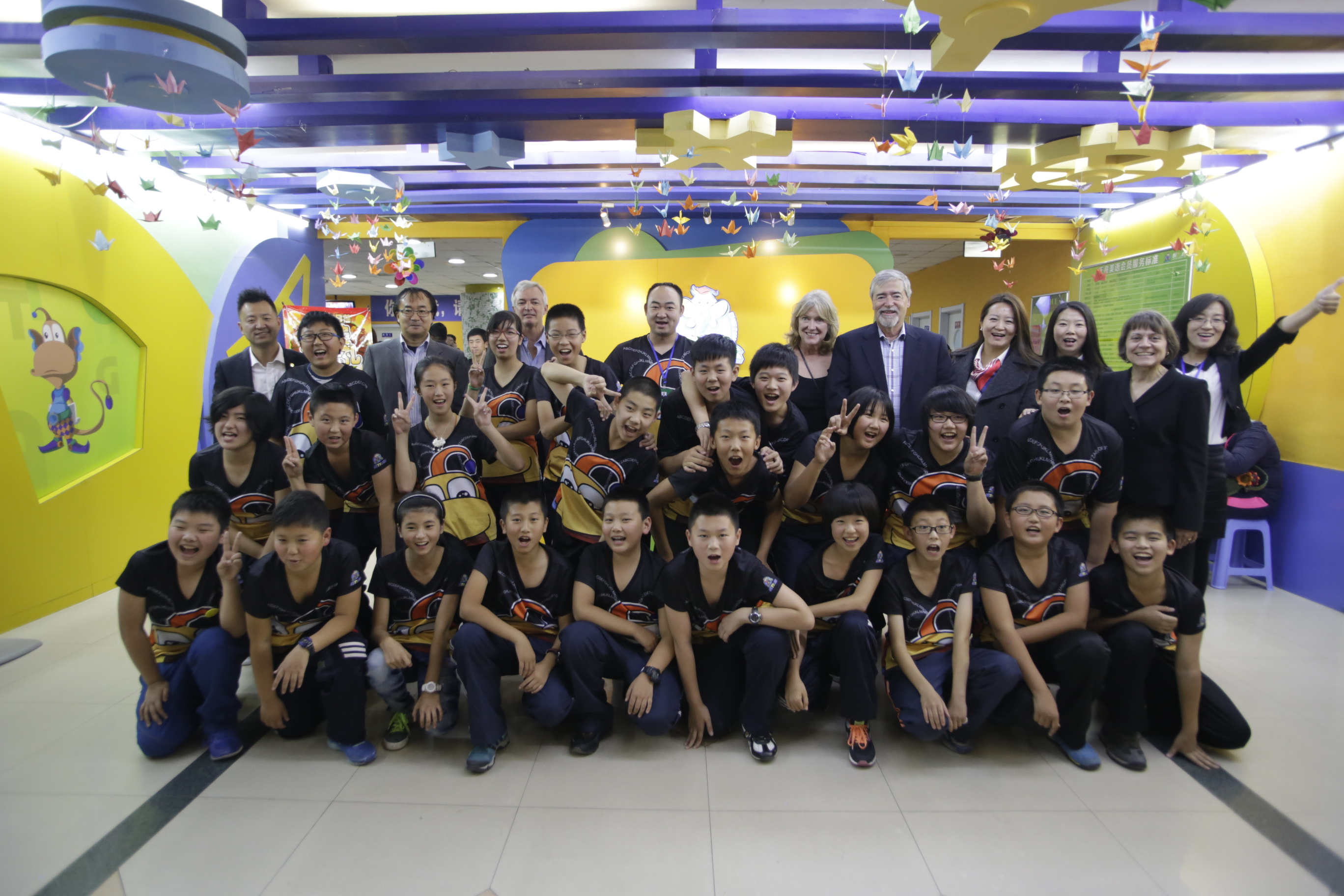
Recently, we had the opportunity, as part of a delegation to meet with education leaders in China, to observe a class of middle school age students debate a topic as a way of integrating speaking, listening, and presentation tasks at Tiantong Education Group’s teaching center in Shenyang, China All of the students are English language learners.. The teacher called the process “debate” but we have modified this title a bit to differentiate it from other debate protocols to “Whole-class Great Debate.”

2014-10-14 17-39-10

The students had just returned to class after a national holiday, and, as you may be aware, China is grappling with pollution that causes health problems for many citizens (for example, read this news article about pollution in Beijing).  Students were asked to “state up their opinion” as to whether it was a good idea to stay home during the holiday or to go somewhere, such as the beach.

Students sat in rows, two on each side, facing each other. Initially, a student on each side states an opinion that staying home or going out for the holiday is their preferred option.  Each side then adopted one of the two stated positions.  They met in small groups to come up reasons in support of staying home or going away. Next, a student stated the opinion to which the other side responded. Students they returned to their group to determine counterarguments to those they heard. The process began again. A selected student (a volunteer in the class), then summarized the group’s position.

So far, this seems much like a typical classroom debate. However, to keep the students engaged in the discussions and to encourage them to listen to one another, the teacher developed protocols for speaking to the class. Students were encouraged to stand up and speak up taking turns from one side or the other. The spontaneous nature of standing and speaking motivated students to listen so they might speak. However, at times, more than one student from a side might want to speak. They learned to call “I’m, first” but sometimes it was hard to tell who was actually first. To keep everything moving and in control, students could use a version of “rock paper scissors” to decide who would actually speak first. Finally, each side met again to review their opinions and the counterarguments to their opinions, and a final summary speaker was elected.

ELLs at Tiantong Education Center

The teacher did choose a colleague to come in and evaluate the debate and select a winner based on a rubric for developing and stating an opinion, but it was clear that the debate’s main goal was interaction in English requiring students to listen carefully to each side, discuss their opinions and those of the other side, then speak publicly about it.  The teacher recognized the strengths of each team’s presentation. We hope you enjoy watching this video of the Whole-class Great Debate.

IAIE Representatives

Representatives from IAIE include Jin Zhang, Dana Grisham, Thomas DeVere Wolsey, Marc Grisham.

Reference

Common Core State Standards Initiative. (2012). Application of Common Core State Standards for English language learners [PDF]. Retrieved from http://www.corestandards.org/assets/application-for-english-learners.pdf

Access to Texts on a Global Scale

Recently, I had the privilege of working with teacher educators, class teachers and children on a development aid project on literacy in Zambia, Africa. In one classroom I visited there were sixty little boys sitting at weather-beaten desks and the teacher was attempting to teach literacy from a single class reader-the one and only available book in the classroom. As literacy educators we know the importance of connecting the right book, to the right child, at the right time. However, access to texts, and more importantly equality of opportunity in access to texts, is a real issue in developing countries (and indeed among marginalised communities worldwide).

The World Internet Usage Statistics (www.internetworldstats.com) indicate that almost 35% of the world population are now online and that growth in access to the Internet in developing countries is advancing at a rapid rate. So perhaps access to books on the Internet may prove a feasible path to fostering literacy, and nurturing a lifelong love of books and reading, among children, both in developing countries and in marginalised communities worldwide. In this blog post I will review a number of organisations who are attempting to do just that.

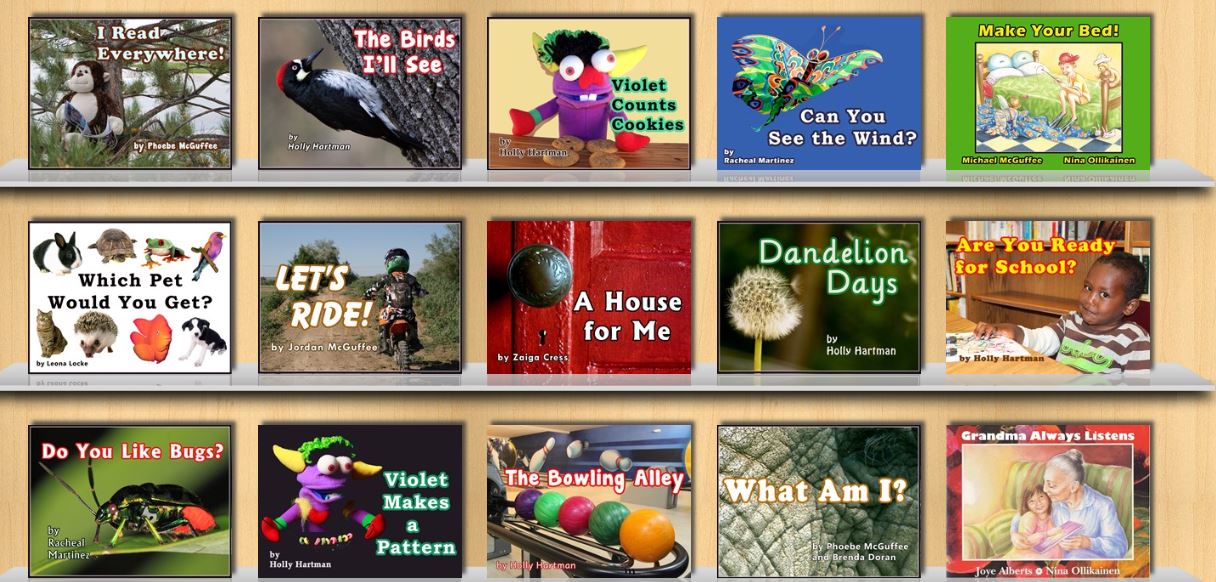
Book abundance is the vision and mission of Unite for Literacy (www.uniteforliteracy.com). Mark Condon began creating libraries of inexpensive, culturally appropriate and linguistically rich picture books for children in marginalised communities in the 1990s. This initiative has grown into a “Wondrously Infinite Global Library” as noted on the Unite for Literacy Website. The site provides access to a growing number of electronic picture books that honour and celebrate the culture and home languages of a diverse range of children. These picture books can be read aloud in English but also, crucially, in a range of about 12 other languages such as, Spanish, Chinese, Arabic, French, Russian and Vietnamese. Examples of the range of texts are shown in the screen saver from the Unite for Literacy website below

MArk condon

“The path to a literate life is a story that must pass through the heart.”  Mark Condon

We Give books (http://www.wegivebooks.org) is a website created by the Penguin Group and Pearson Foundation Group which provides Internet access to a range of  fiction and informational text books suitable for children up to the age of 10. These electronic texts can be read across a range of digital platforms and electronic devices. The site provides access to a range of award winning and recently published texts. For every book read from the digital library We Give Books donate books (almost two and a half million to date!) to charities and worthwhile causes in communities around the world.

When I was growing up swapping books among friends was one of our favourite pastimes. Little Free Library (http://littlefreelibrary.org) is based on the similar concept of ‘bring a book, take a book’.

little free library 3

This movement started in the US but is now slowly growing across the globe ( as shown in the map below) and may provide community-generated access to books. For examples of the creativity of people in creating mobile Little Free Library book stores visit Pinterest http://www.pinterest.com/ltlfreelibrary/.

little free library 2

Finally, you will find a more extensive list of sites providing free electronic texts for children at http://www.techsupportalert.com/free-books-children

Note: Post updated 1-30-2017, video removed that was no longer available.